
A Visible Gap in a Torsion Spring
A separated coil on the shaft is a common sign that a torsion spring has broken. Do not touch the spring, shaft, drums, or cables.
Serving Blountstown, Florida
Get a broken torsion or extension spring replaced, the tension set for the door, and the complete system checked before the opener goes back to work.
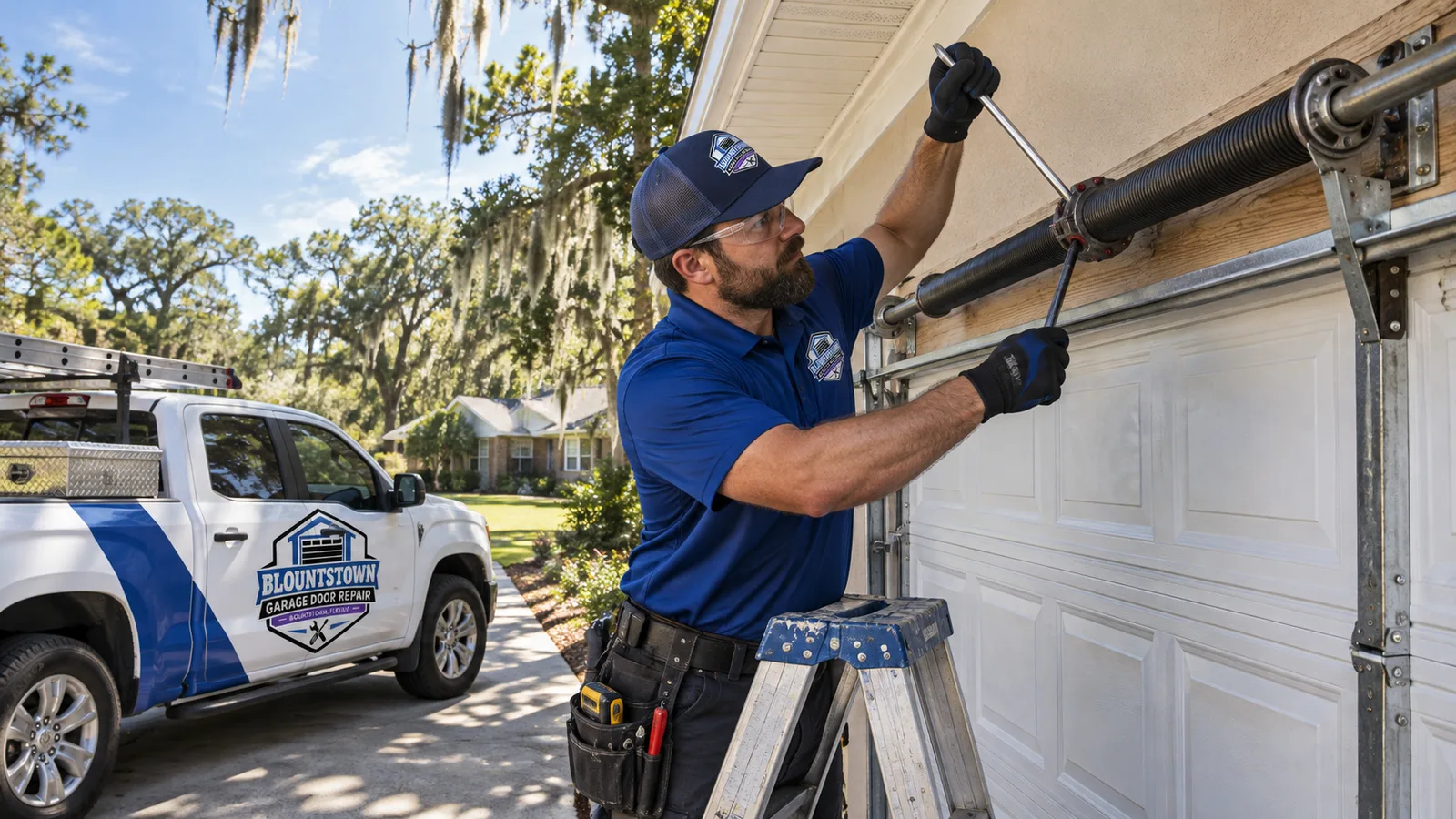
For garage door spring repair in Blountstown, FL, Blountstown Garage Door Repair starts with the door itself: its weight, spring system, condition, and movement. Springs counterbalance a heavy door so it can be lifted by hand and moved without forcing the opener to carry the full load. When a spring snaps or loses tension, the door may become extremely heavy, rise unevenly, or stop opening.
Do not keep pressing the opener when the door will not lift. The added load can strain the motor, rail, trolley, or drive components. Avoid pulling the emergency release while the door is open because a door without adequate spring support can fall. Keep people, pets, and vehicles clear until the system has been inspected.
Blountstown Garage Door Repair works as a professional garage door company in Blountstown, matching the replacement spring to the door and checking the complete counterbalance system before normal operation resumes. The goal is controlled travel and a properly balanced door, rather than replacing a visible broken part and overlooking the reason the system is moving poorly.
A torsion system usually has one or more springs mounted on a shaft over the door. The springs apply torque through cable drums and lift cables. Correct repair requires identifying the spring dimensions and wind direction, securing the shaft, replacing the failed component, setting tension with proper winding bars, and checking cable placement at both drums.
An extension system uses springs that stretch along the horizontal tracks. These springs work with pulleys and cables, and the system should include containment or safety cables through the spring. Repair involves matching spring capacity to the door, inspecting the pulleys and cables, setting both sides evenly, and confirming that the door does not rack in the opening.
A spring should be selected by door weight and system geometry, not by appearance alone. Wire size, inside diameter, coil length, spring orientation, drum type, and door height can affect the correct torsion setup. Extension springs are commonly identified by rated lifting capacity. Installing an incorrect spring can leave the door too heavy at the floor or cause it to rise when partly open.
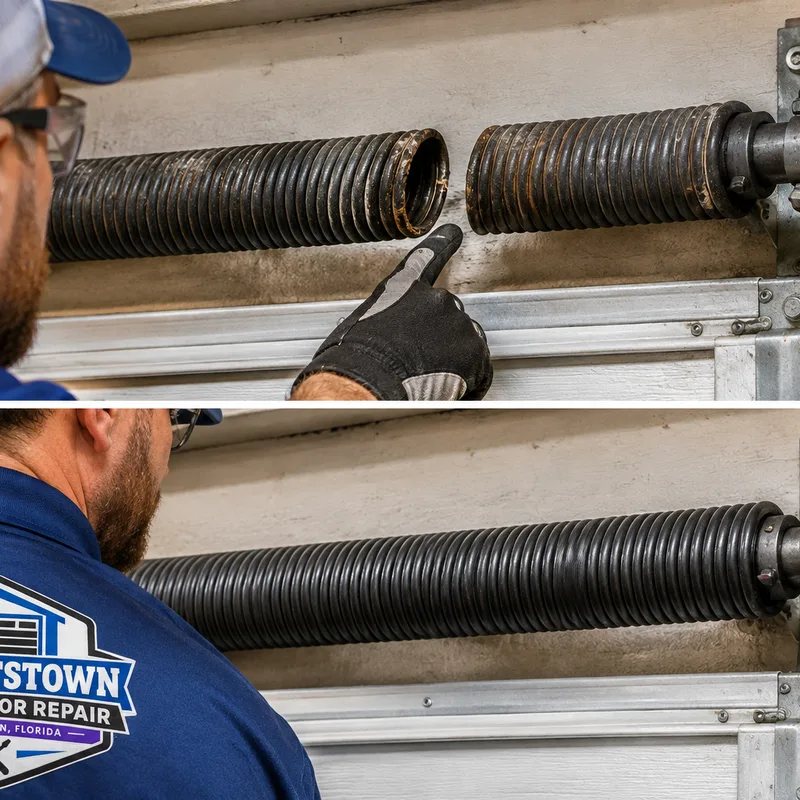
A separated coil on the shaft is a common sign that a torsion spring has broken. Do not touch the spring, shaft, drums, or cables.
A properly balanced door should not depend on the opener to lift its full weight. Sudden heaviness often points to lost spring assistance.
An opener may stop or reverse when a failed spring creates too much resistance. Repeated attempts can add strain to other components.
A door that tilts may have uneven spring force, a cable problem, or a cable that has left its drum. Stop operation before the rollers or panels bind.
Loose cables can follow a spring failure because the counterbalance system has lost tension. They should be reset and inspected, not simply placed back on the drums.
A spring can release stored energy with a sharp sound when it breaks. A gap in the spring or a door that will not lift helps confirm the problem.
Blountstown Garage Door Repair identifies whether the door uses torsion or extension springs and checks the shaft, bearing plates, drums, lift cables, pulleys, tracks, rollers, and attachment points. The door's weight and condition help determine the required spring capacity.
The door and shaft are controlled before any spring hardware is loosened. Spring systems store substantial mechanical energy, so clamps and purpose-made tools are used to prevent unintended movement.
The replacement is matched to the door and installed in the proper orientation. On a torsion system, the cables must remain seated in the drum grooves while tension is applied evenly.
Spring tension is adjusted so the door can be tested manually. A balanced door should move through its travel without dropping hard, shooting upward, or becoming excessively heavy at partway open.
The opener is reconnected only after the door moves correctly by hand. Final checks cover full travel, cable tracking, operating clearances, and the opener's force and reversal behavior.
A spring repair is incomplete until the door is balance-tested. With the opener disconnected and the door controlled by hand, its movement shows whether the springs are carrying the correct share of the load. A door that drops needs more effective spring force or a different spring specification. A door that rises on its own may have excessive tension.
The inspection should also confirm that lift cables track evenly and remain seated on the drums. Frayed cables, rough bearings, damaged pulleys, loose brackets, or binding rollers can change how the door moves even when a new spring is installed. These conditions need to be separated from opener problems so adjustments are made to the correct system.
Blountstown's warm, humid climate also makes corrosion worth checking on springs, cables, and exposed hardware. Rust does not prove that a part has failed, but deep corrosion, broken wire strands, and rough-moving bearings can affect safe operation. Blountstown Garage Door Repair checks those working parts while diagnosing the spring problem.
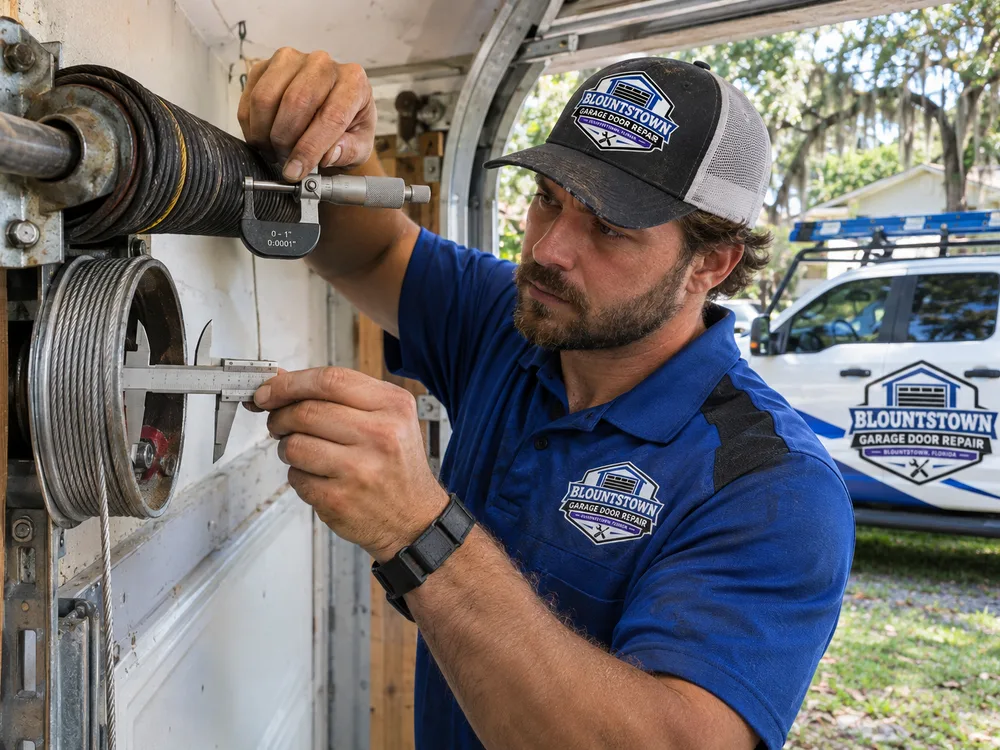
A snapped spring can leave the door too heavy to move safely. Arrange an inspection before repeated opener use causes additional strain or a loose cable creates another problem.
CALL NOW: (850) 633-1526Tell Blountstown Garage Door Repair what the door is doing and whether it is stuck open or closed. The spring system and related hardware are inspected to identify the repair needed to restore balanced movement.