
Opening and Framing Check
The installation plan begins with finished-opening measurements and checks for adequate jamb fastening surfaces, headroom, side clearance, backroom, and a reasonably level floor.
Serving Blountstown, Florida
Get a properly sized door with matched tracks, springs, hardware, and opener setup, followed by on-site balance and safety testing.
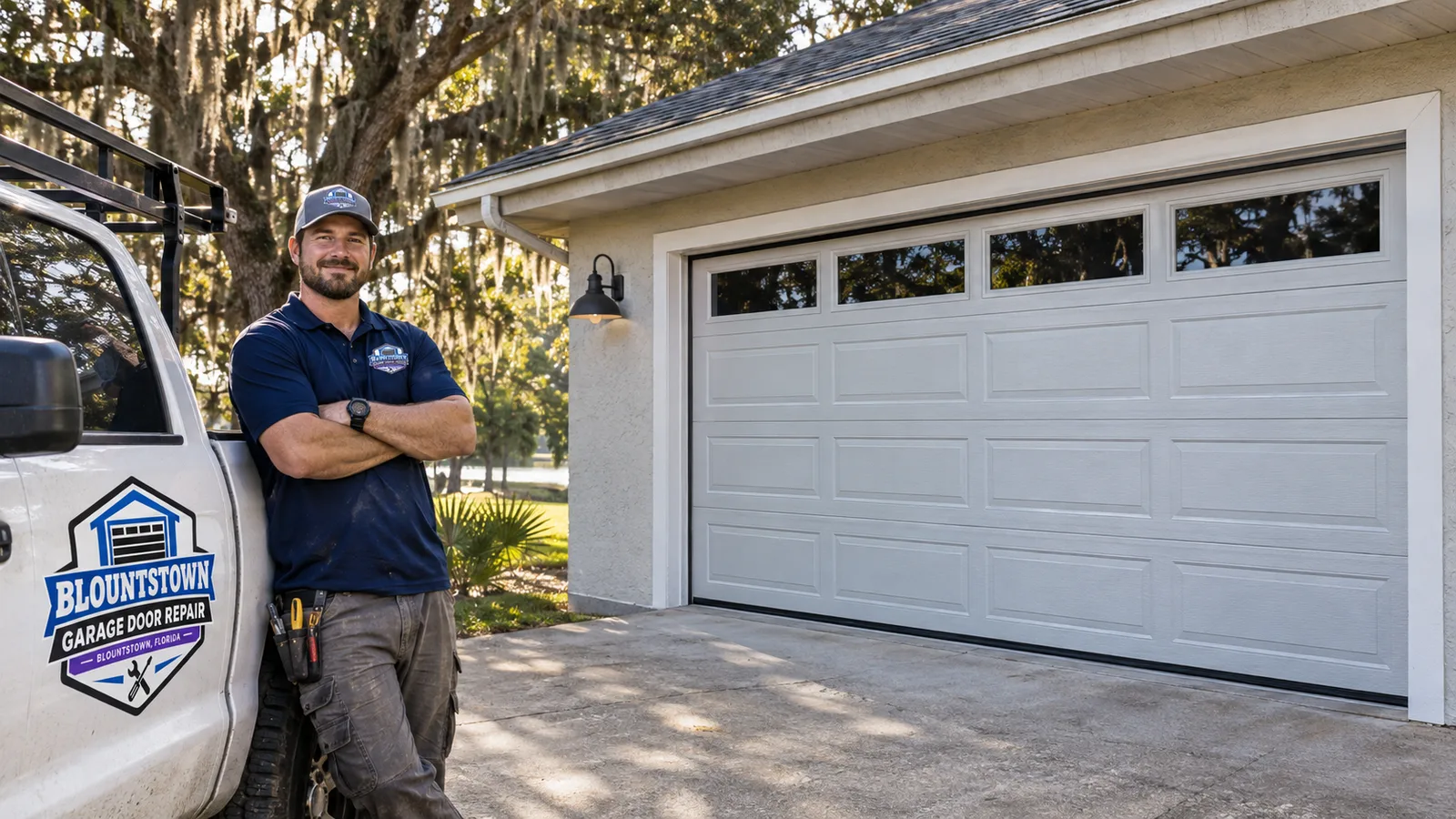
Garage door installation in Blountstown, FL starts with accurate measurements and a clear look at the structure around the opening. Blountstown Garage Door Repair checks the opening width and height, available headroom, side room, backroom, framing, floor condition, and power location before settling on the installation plan. Those details determine which door, track configuration, spring system, and opener arrangement will fit.
Blountstown Garage Door Repair, a professional garage door company in Blountstown, FL, handles the setup as one connected system rather than treating the door and hardware as unrelated parts. The door sections, rollers, hinges, tracks, cables, drums, springs, and opener must work together. Proper installation helps the door travel evenly, sit correctly against the floor, and remain balanced through its full range of movement.
North Florida heat, humidity, heavy rain, and wind-driven weather make material choice and perimeter sealing practical concerns. Steel construction, corrosion-resistant hardware, an intact bottom seal, and properly fitted side and top weatherstripping can help a garage opening stand up to regular exposure. Wind-load requirements may also affect the door and reinforcement package selected for a specific property. Applicable requirements should be confirmed for the address and proposed door before installation.
A replacement should fit the opening, the building, and the way the garage is used. A detached storage garage may call for a straightforward non-insulated steel door. An attached garage, conditioned workspace, or room next to the garage may benefit from an insulated door with better section construction and perimeter seals. Insulation values depend on the complete door assembly, so the stated R-value should be considered alongside panel design, joints, glazing, and weatherstripping.
Common residential choices include raised-panel, flush, carriage-style, and contemporary doors. Steel is widely used because it is available in many finishes and insulation levels. Window sections add daylight but also change privacy, weight, and the door's appearance. Every selection must remain compatible with the opening dimensions and rated hardware.
Door weight matters. Springs counterbalance that weight, while the opener guides a door that is already balanced. An opener should never be used to compensate for incorrect springs, binding rollers, or misaligned tracks. Blountstown Garage Door Repair can explain the available options before the door and hardware are chosen.
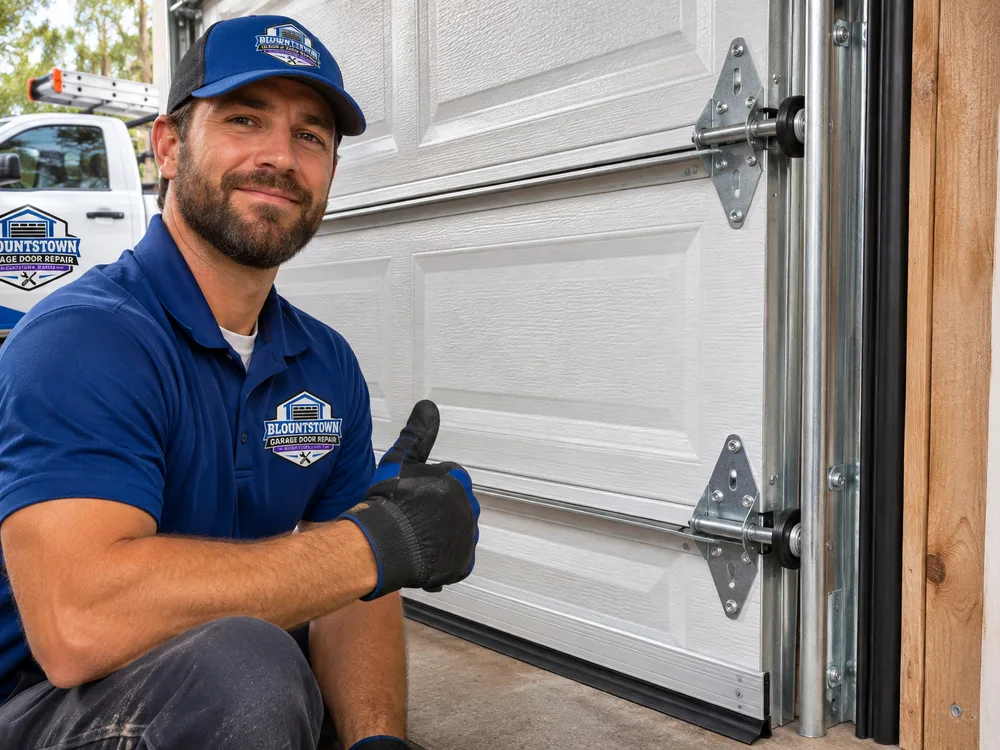
The installation plan begins with finished-opening measurements and checks for adequate jamb fastening surfaces, headroom, side clearance, backroom, and a reasonably level floor.
Sections, hinges, rollers, vertical tracks, horizontal tracks, brackets, and reinforcement are assembled and aligned for smooth travel without rubbing or binding.
Torsion or extension spring components are selected for the door's actual weight and track arrangement. Cables, drums, bearings, and containment hardware must match the system.
When an opener is included, its rail, header bracket, motor unit, door arm, controls, force settings, and travel limits are set for the installed door.
The bottom seal and perimeter weatherstripping are fitted to reduce gaps around the closed door. Floor slope and uneven concrete can affect how tightly the bottom seal meets the threshold.
The finished system is checked for balance, track clearance, fastener security, cable position, opener reversal, and photo-eye operation before normal use.
Blountstown Garage Door Repair records the opening dimensions and checks the jambs, header, ceiling clearance, floor, nearby obstructions, and electrical access. Existing hardware is assessed if the project involves replacing an older door.
The door size, panel design, color, insulation level, window choice, track type, spring system, and opener compatibility are confirmed before setup. Any needed framing or electrical preparation should be identified at this stage.
For a replacement, the old door and hardware are taken down in a controlled sequence. Garage door springs and cables store substantial energy, so dismantling them is not ordinary demolition work.
The new sections and hardware are assembled, tracks are set plumb and parallel, and the counterbalance system is installed. Clearances are checked as the door moves through the radius into the horizontal tracks.
If an opener is part of the project, it is mounted and connected after the door moves correctly by hand. Travel limits, force controls, wall control, remotes, and photoelectric sensors are then set.
The door is cycled, checked at several positions for balance, and inspected for noise or binding. The opener's automatic reversal and photo-eye response are tested, and basic operating guidance is reviewed.
A correctly counterbalanced garage door should remain controlled when disconnected from the opener and moved by hand. If it drops, rises sharply, or feels unusually heavy, the spring setup needs attention. The exact balance behavior depends on the door design and hardware, but the opener should not have to drag the door through its travel.
Torsion springs are commonly mounted on a shaft over the opening. Extension springs run alongside horizontal tracks and require appropriate containment measures. These systems are not interchangeable without changes to the hardware and available space. Spring selection is based on door weight, drum and track geometry, and the required cycle specification.
Powered doors also rely on safety controls. Photoelectric sensors are positioned near the floor and must face one another without obstruction. The opener's travel and force settings must suit the finished installation. Manual release operation should be understood before an outage occurs, especially when the garage has no separate entry door.
The condition of the opening can change both the scope and the final fit. Weak jamb material may not provide a sound fastening surface for track brackets. Low ceilings can require low-headroom track. A rear beam, attic access, lighting, storage racks, or ductwork may reduce backroom. Sloped or uneven concrete can leave a gap that a standard bottom seal cannot fully correct.
Attached garages also deserve careful attention at the entry into the home. A new overhead door does not correct problems with the separate passage door, wall construction, or other parts of the garage enclosure. Those conditions should be treated as distinct building issues.
Local permitting or product-approval requirements may depend on the address, work scope, and door specification. Wind-load labeling and reinforcement are specific to the tested door assembly. Substituting struts, tracks, brackets, or attachment details without manufacturer support can change how that assembly performs. The selected door should follow the manufacturer's installation instructions and any requirements that apply to the property.
Share the opening size, whether an old door is being replaced, and how the garage is used. Blountstown Garage Door Repair can help organize the door, hardware, opener, and site preparation into one clear installation scope.
CALL NOW: (850) 633-1526Tell Blountstown Garage Door Repair about the opening, the door style you want, and whether you need an opener. Fit, hardware, site conditions, and installation scope will be clearly explained.