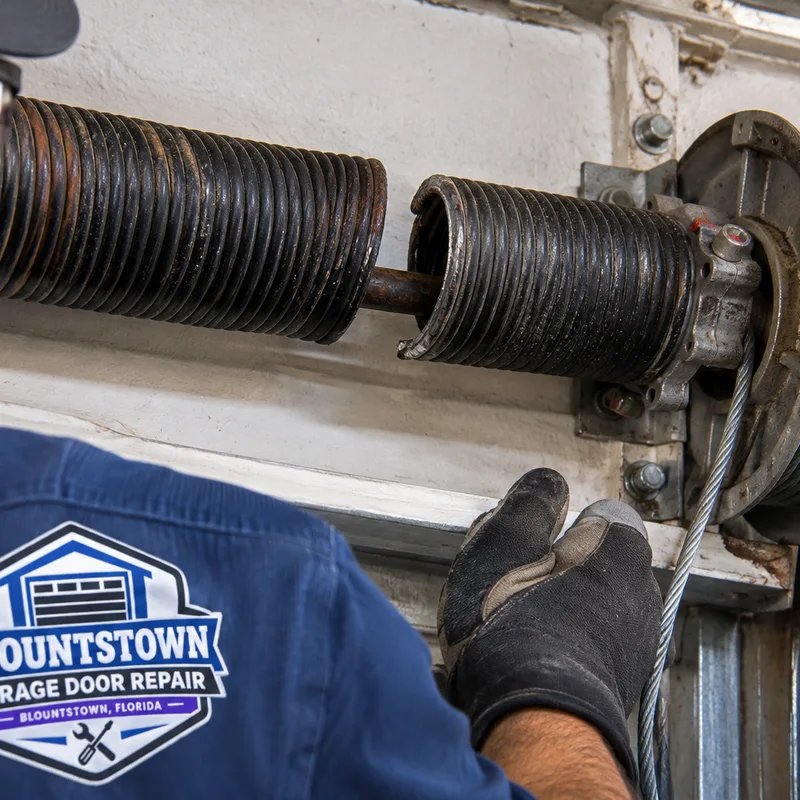
Broken torsion or extension spring
A loud snap, a visible gap in a torsion spring or a door that suddenly feels extremely heavy points to failed spring support. Springs are under high tension and require proper tools and matching replacement parts.
Serving Blountstown, Florida
Get help with a garage door that is stuck, crooked, unusually heavy, off its track or unable to close securely. A careful diagnosis identifies the failed parts and the safest repair.
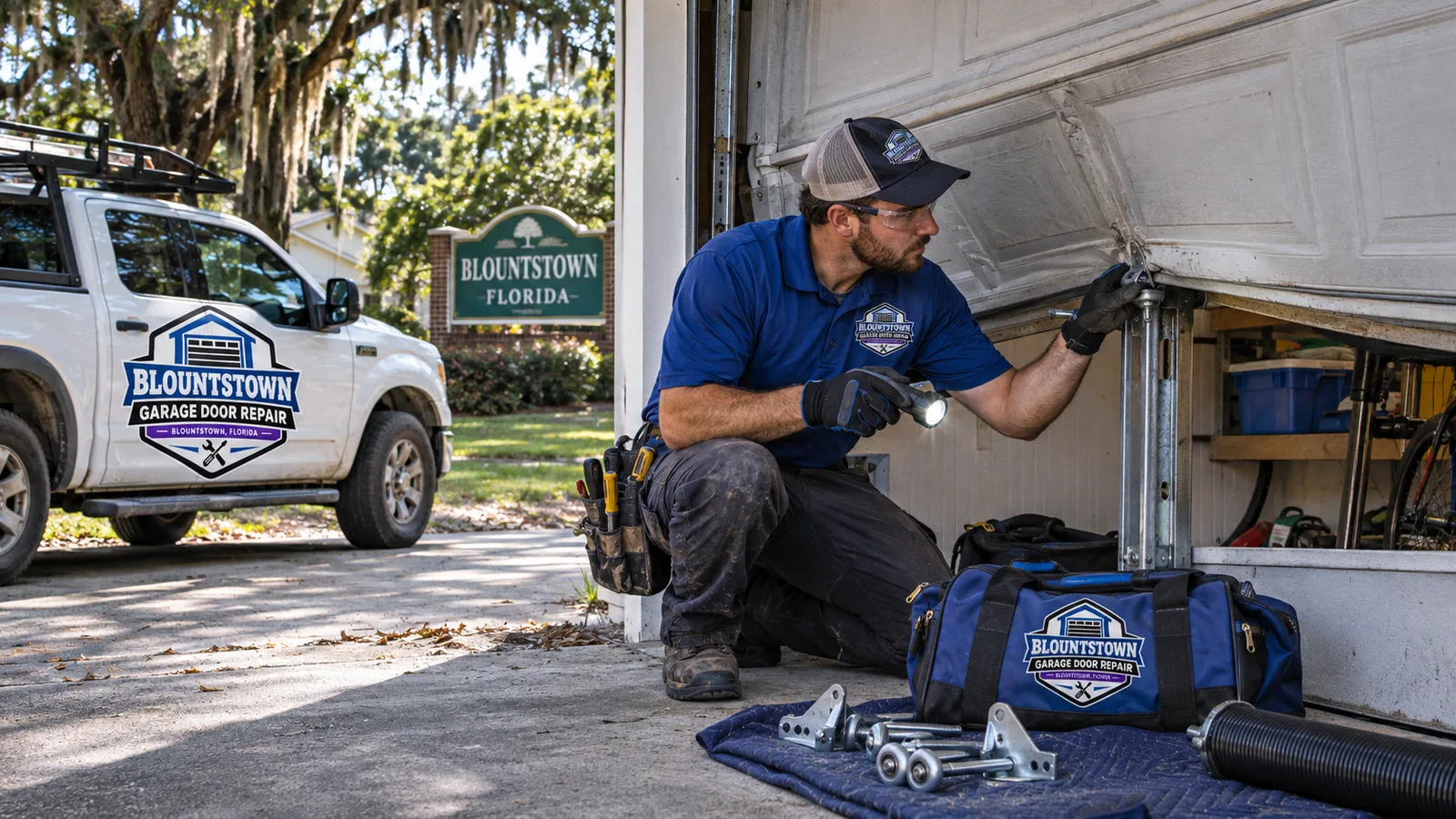
When a door traps a vehicle, leaves the garage exposed or hangs unevenly, emergency garage door repair in Blountstown, FL is appropriate. Blountstown Garage Door Repair handles urgent problems involving broken springs, loose or snapped cables, jammed rollers, bent track and openers that will not move the door.
A malfunctioning garage door can weigh hundreds of pounds. Do not pull loose cables, loosen spring hardware or force a crooked door with the opener. Keep people, pets and vehicles away from the opening. If the door is open and unstable, avoid standing or walking beneath it. Disconnecting an opener is also unsafe when a broken spring has made the door too heavy to control by hand.
Blountstown Garage Door Repair works as garage door specialists serving Blountstown, focusing first on the immediate safety and security problem. The goal is to identify why the system failed, explain which parts need attention and establish a repair plan before work begins.
A loud snap, a visible gap in a torsion spring or a door that suddenly feels extremely heavy points to failed spring support. Springs are under high tension and require proper tools and matching replacement parts.
Lift cables keep the bottom of the door level as it moves. A cable that leaves its drum can make one side rise while the other side remains down, placing more strain on the track and panels.
A roller outside the track, a bent vertical track or an impact near the opening can leave the door crooked. Stop operating it because continued movement may pull out additional rollers or damage hinges.
An open door can expose vehicles, tools and the interior garage. The cause may be a spring, cable, roller, track or opener problem, so the full counterbalance system needs to be checked before the door is lowered.
If the opener hums or the rail moves while the door stays down, repeated attempts can damage the opener. A failed spring, obstructed track or disconnected trolley may be responsible.
Photo-eye alignment, an obstruction, travel settings or excess resistance can make an automatic door reverse. Safety sensors should never be bypassed to keep the door closed.
Stop using the wall control and remote if the door is crooked, making harsh grinding sounds or lifting only on one side. Repeated cycles can turn a repairable cable or roller problem into damaged tracks, hinges or door panels. Do not try to straighten the door by pushing one corner.
If the door is fully closed and stable, leave it closed. Avoid using the emergency-release cord unless you are certain the door can be controlled manually. That cord separates the door from the opener; it does not remove the door's weight. With a broken spring, the door may be far heavier than expected.
If the door is open, clear the area without passing beneath it. Do not clamp the track, remove a bottom bracket or wind a spring as a temporary fix. Bottom brackets carry cable tension, and torsion spring work requires winding bars sized for the hardware. Share whether the door is open or closed, whether it sits level and what happened immediately before it stopped. Those details help narrow the likely failure.
Tell Blountstown Garage Door Repair whether the door is open, closed or partway down. Mention a loud snap, impact, loose cable, crooked movement or trapped vehicle, as well as whether the opener still responds.
The first task is controlling the door so it cannot drop or move unexpectedly. The inspection covers springs, drums, cables, bearings, rollers, hinges, tracks, opener attachment and visible panel damage.
The findings determine whether a component can be reset or must be replaced. Spring size and cycle rating, cable condition, door weight, track alignment and compatible hardware all affect the proper repair.
After the approved work, the door is moved through its travel and checked for level operation. Spring tension and cable tracking must allow the door to stay controlled rather than shoot upward or drop.
Final checks include manual balance, track clearance, fasteners, opener force, travel limits, photo-eye response and the automatic reversal function. The opener should assist a balanced door, not lift dead weight.
Garage door failures are often connected. A cable may leave its drum because the door hit an obstruction, a spring broke or the shaft shifted. A roller may come out after the track was bent by impact. Replacing the obvious part without finding the cause can leave the door unbalanced or likely to bind again.
For spring work, correct sizing matters. Wire diameter, inside diameter, spring length, wind direction and door weight determine the required torsion spring. Where a door uses two torsion springs, both springs and the overall balance should be evaluated because they work together on the same shaft. Cables should be examined for fraying, corrosion and proper seating in the drum grooves.
Florida's humid, storm-prone climate can expose garage door hardware to moisture and wind-driven debris. After severe weather, avoid operating a door with visibly bent tracks, shifted panels or damaged reinforcement. Blountstown Garage Door Repair can distinguish a door-system fault from a power or opener issue and explain whether the immediate repair restores safe operation or whether additional damage changes the scope.
The complete operating system is considered: springs, drums, lift cables, bearings, rollers, hinges, tracks, opener attachment, photo eyes, panel condition and the door's manual balance.
A crooked or unsupported garage door can become more dangerous each time it moves. Stop operating it and arrange an assessment of the springs, cables, tracks and opener before more damage occurs.
CALL NOW: (850) 633-1526Tell Blountstown Garage Door Repair what the door is doing, where it stopped and whether the opening is secure. You will receive clear guidance based on the condition of the complete door system.