
Motor Runs but the Door Does Not Move
A stripped internal gear, disconnected trolley, damaged sprocket or loose chain or belt can let the motor run without transferring motion to the door.
Serving Blountstown, Florida
Get a careful diagnosis of the motor unit, drive system, controls and safety sensors before deciding whether to repair or replace the opener.
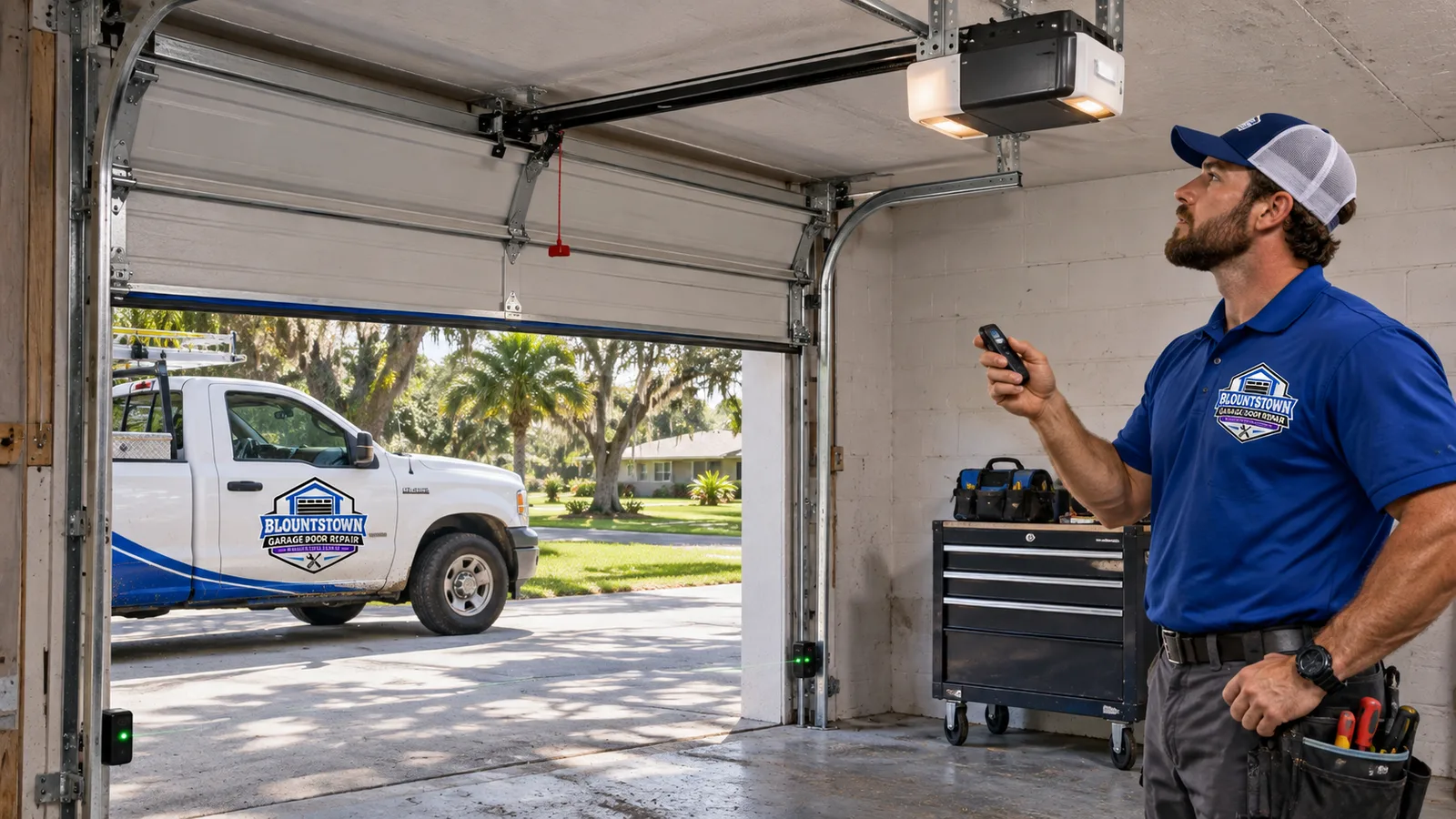
When the door will not open, reverses without warning or makes an unfamiliar grinding sound, the opener needs more than a quick reset. Blountstown Garage Door Repair provides garage door opener repair in Blountstown, FL, with attention to the complete operating system: the motor head, chain or belt drive, trolley, travel settings, wall control, remotes, keypad and photo-eye sensors.
Blountstown Garage Door Repair, a garage door company Blountstown homeowners rely on, starts by checking what the door and opener are doing together. A heavy or binding door can overload an otherwise working motor, while a failed gear or loose drive component can make a balanced door stop moving. Separating opener trouble from door trouble helps identify the right repair and avoids replacing parts that are still usable.
North Florida heat, humidity and thunderstorms can be hard on electronics and exposed connections. Power interruptions may erase remote programming or reveal a weak control board. Dust, moisture, stored items and minor bumps can also shift low-mounted safety sensors. A proper inspection considers those conditions without assuming every failure has the same cause.
A stripped internal gear, disconnected trolley, damaged sprocket or loose chain or belt can let the motor run without transferring motion to the door.
Misaligned photo eyes, blocked sensor lenses, damaged sensor wiring or incorrect travel and force settings can interrupt closing. Door resistance must also be checked before settings are changed.
Noise may come from worn drive parts, a loose rail, poor chain tension or strain caused by the door itself. The source should be found before continued operation causes more damage.
The cause may be a battery, lost programming, a locked wall console, radio interference, a faulty receiver or a keypad that has reached the end of its useful life.
This pattern narrows the diagnosis toward transmitter batteries, programming, lock mode or the opener's radio receiver rather than the motor and drive assembly.
The outlet, plug, breaker, wall control wiring and opener electronics all need consideration. Repeated breaker trips or signs of electrical damage require extra caution.
Chain-drive openers use a metal chain to move the trolley along the rail. A loose chain may slap against the rail, but overtightening it can strain the sprocket and motor assembly. Belt-drive units generally run more quietly, yet their belts, pulleys and drive components still wear. Repair should follow the manufacturer's specifications for the installed model.
Many opener failures occur inside the motor housing. Common service parts include drive gears, sprockets, capacitors, limit components, logic boards and travel modules. Parts vary by brand, model and production date, so the model label matters. The label is commonly found on or under the light cover of the motor unit.
The opener cannot compensate safely for a door that is difficult to move by hand. With the door closed, a technician can disconnect the trolley and assess manual movement, balance and resistance. Broken springs and related door hardware are separate from opener repair and should not be handled by a homeowner because those components may be under substantial tension.
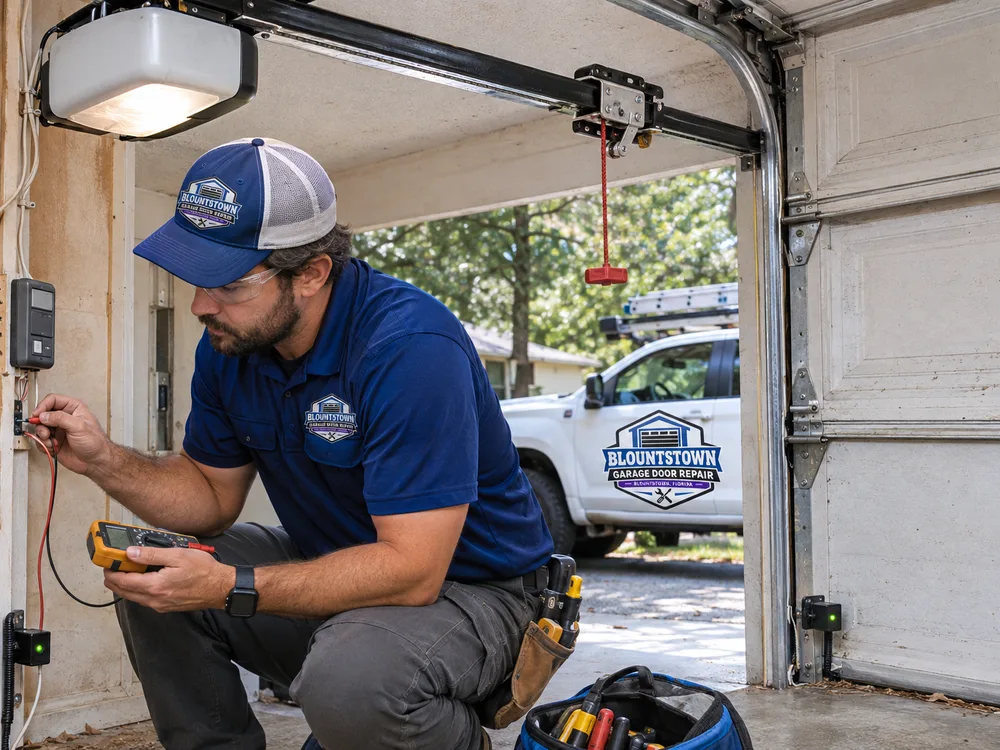
The visit begins with what changed, which controls still work, whether the problem is constant or intermittent, and whether it followed a power interruption or impact.
With appropriate precautions, the door is checked for binding, excess resistance and balance. This shows whether the opener is the source of the problem or is reacting to a mechanical door fault.
The motor head, rail, trolley, chain or belt, wall station, safety sensors and visible wiring are examined. Travel operation and control response are tested.
Blountstown Garage Door Repair identifies the failed or misadjusted component and explains whether a repair is sensible for the opener's condition and parts availability.
After authorized work, the opener is cycled and its controls are checked. Safety-reversal behavior and photo-eye response are verified before normal use resumes.
Repair often makes sense when the opener is otherwise in sound condition and the fault is limited to a serviceable part, such as a gear, capacitor, sensor, remote or keypad. A small adjustment may also resolve a trolley, travel or sensor issue. Replacement may be appropriate when parts are discontinued, the motor housing or rail is damaged, electronics have multiple faults, or major repairs are comparable to a suitable replacement.
Compatibility matters when replacement is considered. Door height, weight, balance, rail configuration and attachment points affect the choice. Horsepower-equivalent ratings alone do not determine whether an opener is appropriate. The door must operate correctly by hand before a new or repaired operator is expected to move it.
Blountstown Garage Door Repair explains the observed fault and available options so the recommendation is tied to the condition of the equipment. If the opener makes harsh noises, stops unpredictably or will not reverse correctly, leave it off until it can be assessed.
A failing opener can leave a vehicle trapped or allow the door to close unpredictably. Arrange a diagnosis before repeated cycling turns a limited fault into broader drive or motor damage.
CALL NOW: (850) 633-1526Tell Blountstown Garage Door Repair what the opener is doing, which controls still respond and whether the problem followed a noise, impact or power interruption. A focused inspection can identify the fault and clarify whether repair or replacement is appropriate.